

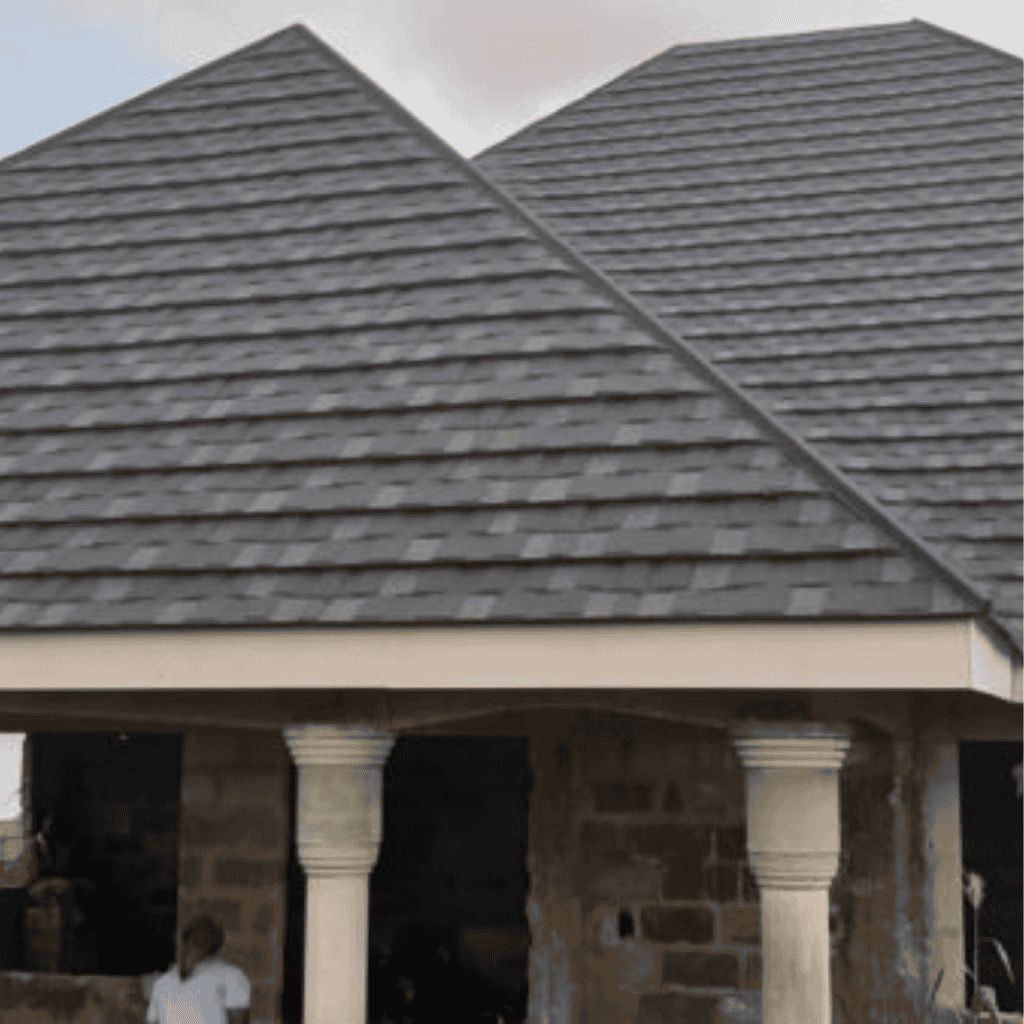
Trying to find the right roof for your property can be a bit of a hassle when you don’t know which type of roofing material on the market is just right for you. Going in blind without the right information can potentially lead you to choose a material that fails within a few years. In the competitive Ghanaian construction market, Stone-coated Aluzinc Roofing sheets have emerged as the gold standard for homeowners who refuse to compromise on aesthetics or durability. This guide will explore why these tiles are the superior choice for your next project.
What Exactly are Stone-coated Aluzinc Roofing Sheets?
Before diving into the benefits, it is essential to understand the engineering behind the product. As the name suggests, the core of the tile is made of Aluzinc—a flat carbon steel coated with an alloy consisting of 55% aluminum, 43.4% zinc, and 1.6% silicon. This specific combination provides a “best of both worlds” scenario: the barrier protection of aluminum and the sacrificial protection of zinc.
However, the “Stone-coated” aspect is what truly sets it apart. The Aluzinc base is coated with natural stone chips using a unique, high-tech bonding technology. This creates a textured, Mediterranean-style look that mimics traditional clay or slate but offers the lightweight strength of modern steel. If you have been searching for Stone-coated Aluzinc Roofing sheets to elevate your home’s curb appeal, understanding this composition is the first step toward a wise investment.
READ ALSO: Metal Shingles vs. Asphalt Shingles in Ghana: Why Metal is the Superior Choice for Your Home
5 Reasons Why Stone-coated Aluzinc is Superior to Standard Metal Sheets
Standard galvanized metal sheets have served many for years, but they come with inherent flaws—noise, heat retention, and a tendency to rust. Here is why upgrading to stone-coated technology is a game-changer.
1. Unmatched Fire Resistance
Safety is paramount when building a family home or a commercial space. Stone-coated Aluzinc Roofing sheets manufactured by Rosa Roofing Systems are engineered to withstand extreme temperatures, remaining intact up to 760 °C.
During rigorous testing, these tiles showed no signs of flames, sparks, or smoke. Because the stone chips reflect heat away rather than absorbing it, they also help maintain “internal cold rooms,” reducing the load on your air conditioning. In the event of a fire, these roofs act as a shield, preventing the structure from burning down before emergency services can arrive.
2. Leakproof and Weather-Tight Design
A leaky roof is more than just an annoyance; it is a structural hazard. Water seeping through a roof can reach electrical wiring within your walls, leading to short circuits and potential fires.
Standard metal sheets often rely on vertical nailing, which creates “open” holes for water to eventually seep through as the washers degrade. In contrast, Aluzinc tiles are designed with a horizontal interlocking system. They overlap and fasten at right angles, creating a watertight seal that stands up to the heaviest tropical downpours without a single drop entering your living space.
3. Eco-Friendly and Safe for Rainwater Harvesting
With the rising cost of utilities, many homeowners in Ghana are turning to rainwater harvesting. However, traditional metal roofs often shed lead or chemicals into the water.
Stone-coated Aluzinc Roofing sheets from Rosa Roof are “green” and environmentally friendly. The natural stone chips do not contaminate the water, making it safe for domestic use and drinking (after standard filtration). Furthermore, these roofs prevent toxic runoff from harming the soil and gardens around your property.
4. Resistance to Rust and Coastal Corrosion
One of the most common questions we hear is: “Do these roofs rust?” The answer lies in the grade. While low-quality Aluzinc (AZ20g to AZ50g) is often found in cheaper imports, which will rust within years, Rosa Roof uses AZ150g—the highest grade available.
Because the surface is further protected by stone chips, it is virtually immune to the corrosive effects of salt spray and sea air. This makes Stone-coated Aluzinc Roofing sheets the only logical choice if your property is located in coastal areas like Accra or Tema.
5. Superior Burglar Proofing
It is an unfortunate reality that burglars often attempt to enter homes by cutting through thin metal roofing or prying up vents. The structural integrity of Aluzinc tiles makes this nearly impossible. The interlocking horizontal fix system creates a “unified shell” across your roof. Because each tile is fastened at multiple points to the battens, a thief cannot simply “peel back” the roof to gain entry.
The Science of Rust: AZ Grades Explained
To understand why some roofs fail while others last 50 years, you must look at the Aluzinc content. Aluzinc grades range from AZ20g to AZ150g. This number represents the grams of coating per square meter.
| Grade | Durability | Best Use Case |
| AZ20g – AZ50g | Low | Temporary structures, inland areas only. |
| AZ100g | Moderate | Standard residential use, away from the sea. |
| AZ150g | Excellent | Coastal areas, industrial zones, and premium builds. |
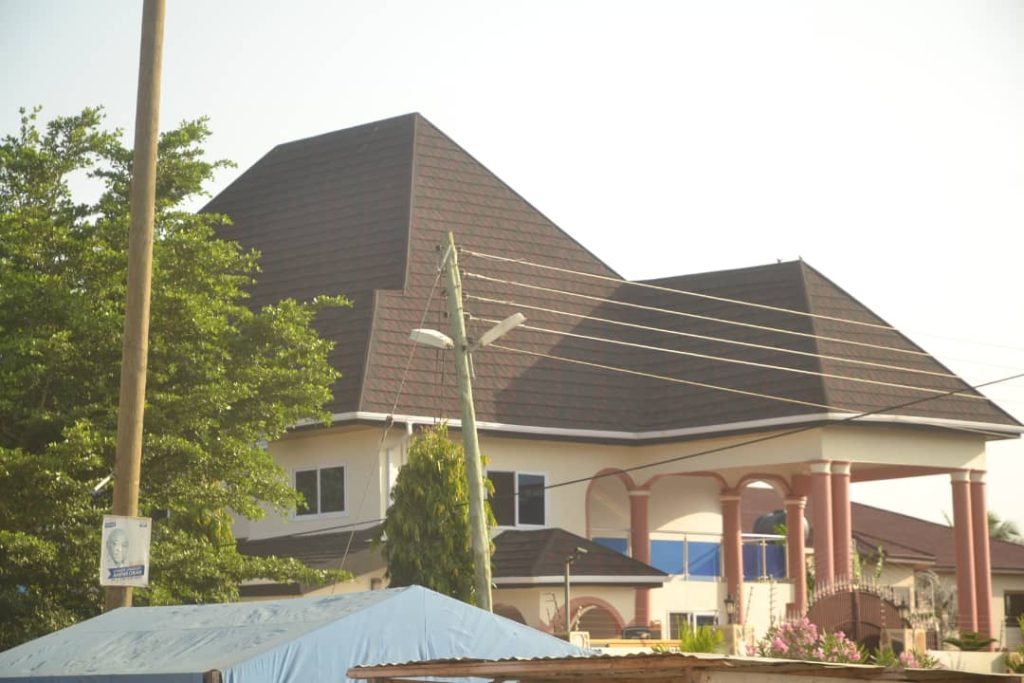
Rosa Roofing sheets are strictly made from AZ150g Aluzinc. This is why we can confidently provide a 50-year written warranty. Many companies importing cheap alternatives from China cannot offer a written warranty because they know their AZ20g product will begin to corrode in the salty Atlantic air within a few seasons.
Frequently Asked Questions
Are Stone-coated Aluzinc Roofing sheets (Eurotiles) good?
Absolutely. They represent the peak of roofing technology. Beyond the durability, they are often referred to as “Eurotiles” because of their elegant profile. They provide the aesthetic of a high-end villa with the structural resilience of industrial-grade steel. They are a fantastic option for those seeking long-term protection and a high resale value for their property.
Is Aluzinc better than Aluminum?
This depends on the project, but Aluzinc typically offers better structural strength. While pure aluminum is excellent for corrosion resistance, it is a soft metal that can be easily dented by falling branches or heavy hail. Aluzinc provides the corrosion resistance of aluminum with the rigid strength of steel, making Stone-coated Aluzinc Roofing sheets a more robust all-around performer for residential housing.
Why is there a price difference?
The Aluzinc grade is the primary driver of cost. Higher AZ grades require more raw materials during the hot-dipping process. While a lower-grade roof might save you money today, the cost of replacing a rusted roof in seven years is significantly higher than investing in quality today.
READ ALSO: Asbestos Roofing Sheets: Key Risks, Drawbacks, and Modern Alternatives
Conclusion: Making the Right Investment
Your roof is the most important shield your property has against the elements. Choosing Stone-coated Aluzinc Roofing sheets means you are investing in a product that is fire-resistant, leakproof, burglar-proof, and immune to the harsh coastal climate of Ghana. Don’t be swayed by low-cost imitations that lack the AZ150g protection; your home deserves a roof that will last as long as the foundation it stands on.
With a variety of vibrant colors and unique designs—including Shingle, Bond, and Classic profiles—you can give your home a luxurious look that never fades.
Ready to protect your home for a lifetime?
Don’t settle for “good enough” when you can have the best. Contact Rosa Roofing Systems today for a free quote and professional consultation. Our experts will help you choose the perfect style and color to match your architectural vision.
Call us now or visit our showroom to see the Rosa difference for yourself!