

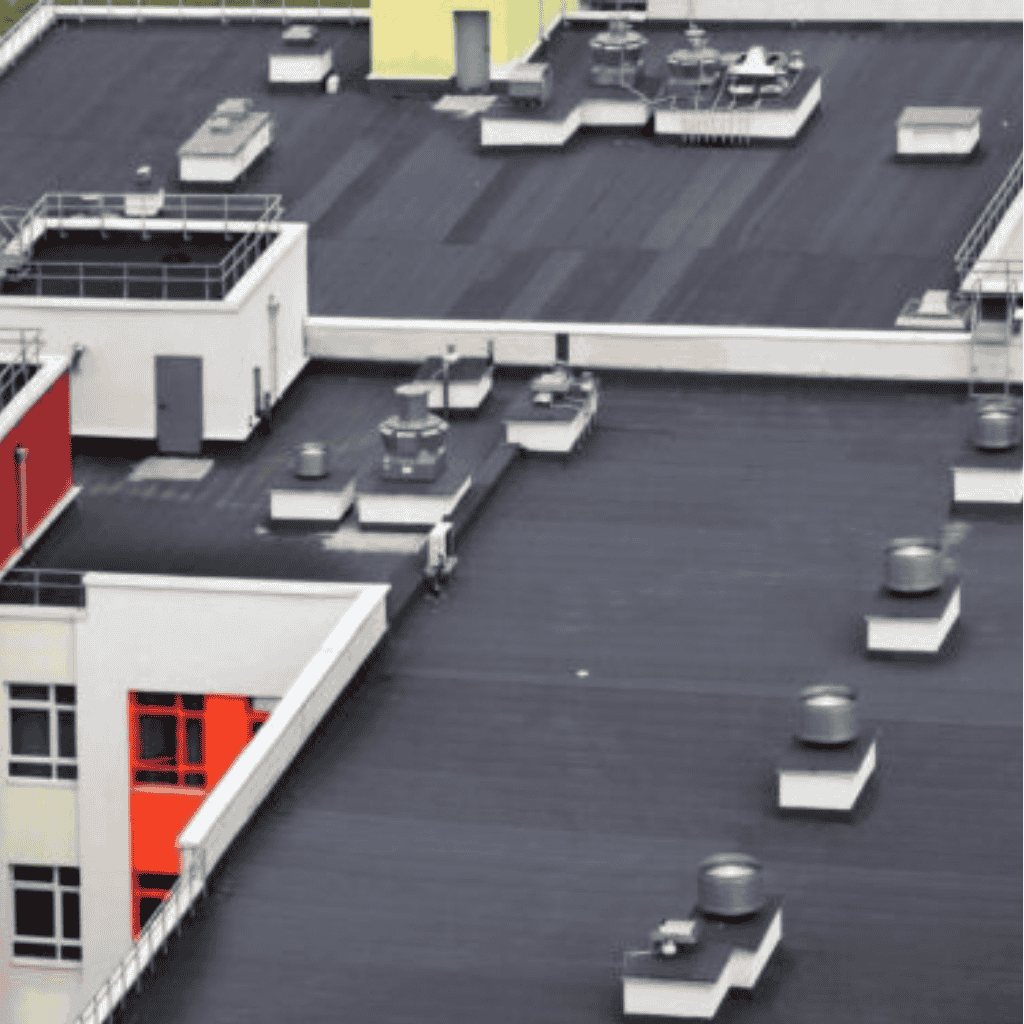
Selecting the right roofing system is one of the most critical decisions a property owner or developer will make. Whether you are constructing a high-rise office in the heart of Accra or a sprawling warehouse in Tema, the roof serves as the primary shield against the elements. Among the various architectural styles available today—pitched, gambrel, and dome—the flat roof for a commercial building has emerged as the gold standard for modern construction.
While traditional sloped roofs have dominated residential sectors for centuries, the commercial world has pivoted toward flat systems for their efficiency, aesthetics, and versatility. However, a “flat” roof is rarely as simple as it looks. In this comprehensive guide, we will explore the technicalities, benefits, drawbacks, and financial implications of installing a flat roof for a commercial building.
What Exactly is a Flat Roof?
It is a common misconception that a flat roof is perfectly level like a tabletop. In reality, a functional flat roof for a commercial building must have a slight incline, typically referred to as a “pitch” or “slope.” This slope, often as minimal as 1:80, is essential for directing rainwater toward internal drains, scuppers, or gutters.
The Anatomy of the System
A flat roof is a multi-layered sandwich of components designed to protect the building’s interior:
-
The Structural Deck: Usually made of steel, concrete, or heavy timber, this is the “skeleton” of the roof.
-
Vapor Barrier: A layer that prevents moisture from the building’s interior from seeping into the insulation.
-
Insulation: Vital for thermal regulation, keeping the building cool in the Ghanaian heat.
-
The Waterproofing Membrane: The outermost layer (such as EPDM, TPO, or Bitumen) that keeps the rain out.
-
Surfacing: An optional layer of gravel or a reflective coating to protect the membrane from UV rays.

Why the Trend is Shifting Toward Flat Roofs
The rise of the flat roof for a commercial building isn’t just about style; it’s about the bottom line. Modern businesses demand efficiency, and flat roofs deliver this in spades.
1. Unmatched Architectural Modernism
The “clean line” aesthetic is currently dominating commercial real estate. In premium neighborhoods like East Legon or Cantonments, flat roofs provide a minimalist silhouette that screams “innovation.” For a business, the exterior of a building is a branding tool. A sleek, modern roof suggests a forward-thinking company.
2. Maximizing the “Fifth Wall.”
In urban environments where land is expensive, a roof shouldn’t just be a lid; it should be an asset. A flat roof for a commercial building provides usable square footage that a pitched roof simply cannot.
-
HVAC Housing: By placing heavy air conditioning units on the roof, you free up ground space for parking or landscaping.
-
Solar Power: Flat surfaces are ideal for the installation of solar arrays, allowing businesses to slash energy costs.
-
Rooftop Lounges: Many modern offices in Ghana are converting flat roofs into employee break areas or client entertainment spaces, significantly increasing the property’s value.
3. Economic Advantages
From a construction standpoint, a flat roof is often more cost-effective than a pitched roof. The reasons are simple: they require less material (fewer rafters and shingles) and are generally faster to install. For a large-scale commercial project, the savings on labor and raw materials can be substantial, allowing developers to reallocate those funds into interior finishing or technology.
READ ALSO: Modern Roofing: The Ultimate Blend of Tech and Design
Common Materials for a Flat Roof for a Commercial Building
If you decide to move forward with a flat system, you must choose a material that fits your budget and climate.
| Material Type | Pros | Cons | Lifespan |
| TPO (Thermoplastic Polyolefin) | Highly reflective (stays cool), eco-friendly. | Newer technology; quality varies by brand. | 15-20 Years |
| EPDM (Rubber) | Extremely durable, easy to repair. | Absorbs heat (can increase cooling costs). | 20-30 Years |
| Modified Bitumen | Strong, multilayered protection. | Requires “torch-down” (heat) installation. | 10-15 Years |
| PVC Membrane | Resistant to chemicals and grease. | More expensive than TPO or EPDM. | 20+ Years |
Navigating the Challenges
No roofing system is perfect. A flat roof for a commercial building comes with specific challenges that require professional oversight, especially in a tropical climate like Ghana’s.
1. The Threat of “Ponding” Water
In Ghana, we experience intense seasonal downpours. On a pitched roof, water sheds instantly. On a flat roof, any slight indentation can lead to “ponding”—standing water that stays on the roof for more than 48 hours.
-
The Risk: Ponding water adds immense weight to the structure and can lead to the “rot” of the membrane.
-
The Solution: Proper engineering of the internal drainage system is non-negotiable. This is why hiring an expert is more important for flat roofs than any other style.
2. Heat Gain and Insulation
The sun in West Africa is unforgiving. A flat surface is exposed to direct UV radiation all day long. Without high-quality insulation and reflective “cool roof” coatings, a flat roof for a commercial building can act like a radiator, heating the rooms below and sending electricity bills through the roof.
3. Maintenance Commitment
A flat roof is not a “set it and forget it” solution. Because debris (leaves, dust, plastic bags) doesn’t slide off naturally, it can clog drains. Regular maintenance—at least twice a year—is required to ensure the drainage paths remain clear and that the seams of the membrane haven’t been compromised by the heat.

Detailed Cost-Benefit Analysis
When evaluating the ROI of a flat roof for a commercial building, you must look beyond the initial invoice.
Initial Investment:
Generally, a flat roof costs 20% to 30% less than a pitched roof for the same square footage. The lack of complex trusses and the speed of installation are the primary drivers of this saving.
Operating Costs:
If the roof is fitted with a reflective TPO membrane, the building’s cooling load can drop by 15%. However, if the roof is poorly insulated, the savings disappear into the air conditioning bill.
Longevity:
A well-maintained pitched roof might last 50 years, whereas a flat roof typically needs a “re-cover” or replacement every 20 to 25 years. However, the ability to use the roof as a functional space (e.g., a rooftop cafe) can generate revenue that far outweighs the cost of a replacement two decades down the line.
The Importance of Professional Installation
The success or failure of a flat roof for a commercial building is determined in the first 48 hours of installation. Many local contractors treat flat roofs like floors, failing to account for the minute slopes needed for drainage.
When you work with a specialized firm, you are paying for:
-
Precision Sloping: Using tapered insulation to ensure water always moves toward the drains.
-
Seam Integrity: Ensuring that the joints between the membrane sheets are chemically or thermally welded to be 100% airtight.
-
Flashing Work: Expertly sealing the areas where the roof meets the walls—the most common site for leaks.
Conclusion: Is a Flat Roof Right for You?
Choosing a flat roof for a commercial building is a decision that balances style, utility, and budget. It is the ideal choice for the business owner who wants a modern look, needs extra space for equipment, and wants to minimize upfront construction costs.
However, it is a choice that demands respect for the elements. In Ghana, where the rains are heavy and the sun is hot, you cannot afford to cut corners. A flat roof is only as good as the team that installs it and the materials used to seal it.
Before you break ground, consider your long-term goals. Do you want a green roof? Do you plan on installing a massive solar array? Do you want a rooftop terrace for your staff? If the answer is yes, the flat roof is your only viable path.
READ ALSO: Roofing Sheets Prices in Ghana 2026: A Complete Buyer’s Guide
Partner with Rosa Roof for Your Commercial Project
At Rosa Roof, we don’t just “lay” roofs—we engineer protection systems. We understand the unique architectural demands of the Ghanaian market and the technical precision required for a high-performance flat roof for a commercial building.
Our team provides end-to-end service, from the initial structural assessment to the final waterproof testing. We use only premium-grade materials designed to withstand tropical UV levels and torrential rain, ensuring your business stays dry and your assets stay protected.
Don’t leave your investment to chance. Whether you are in the planning stages of a new build or looking to upgrade your current facility, our consultants are ready to help. We provide detailed site audits, material recommendations, and transparent quotes that respect your timeline and budget.
Ready to start your project?
Click here to Request a Quote from Rosa Roof or call our lead engineers today. Let’s build a foundation for your business’s success—from the top down.